Radio Remote Control Systems
What Are Radio Remote Control Systems
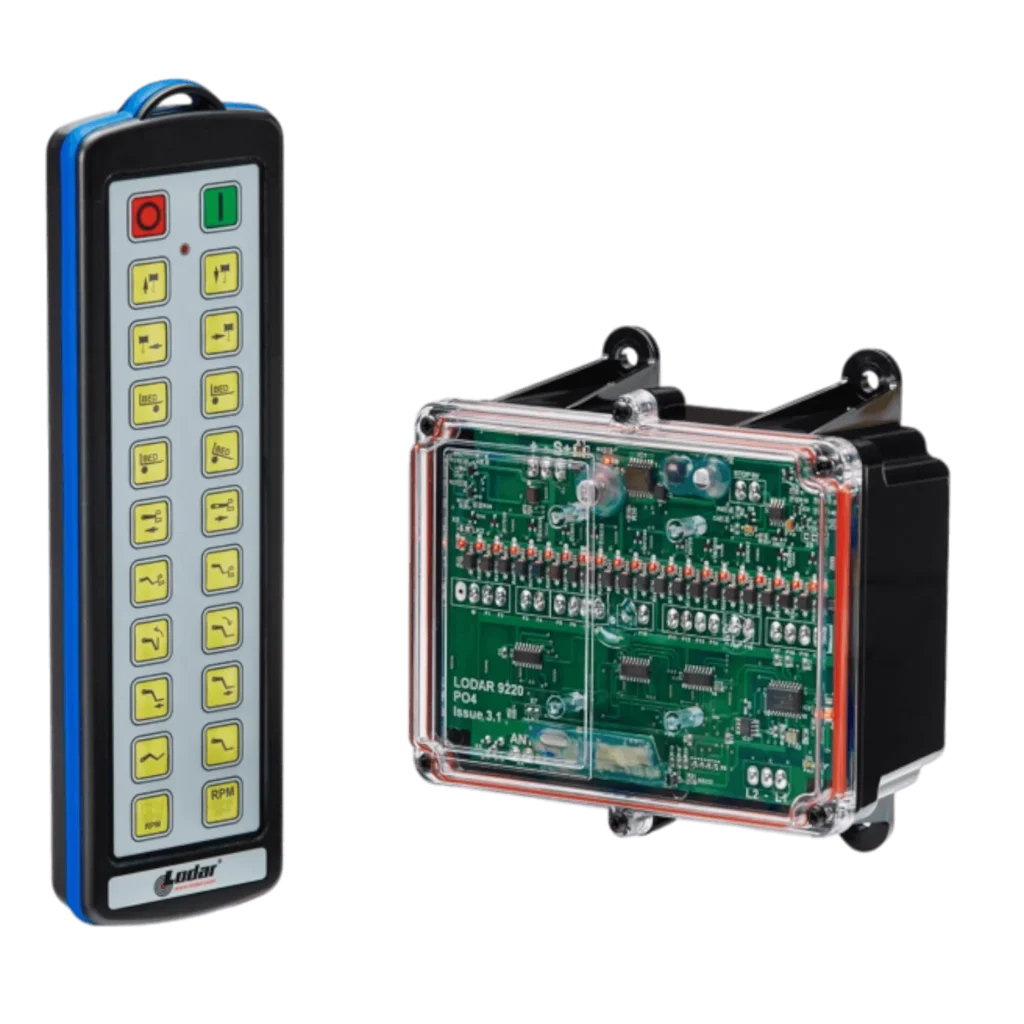
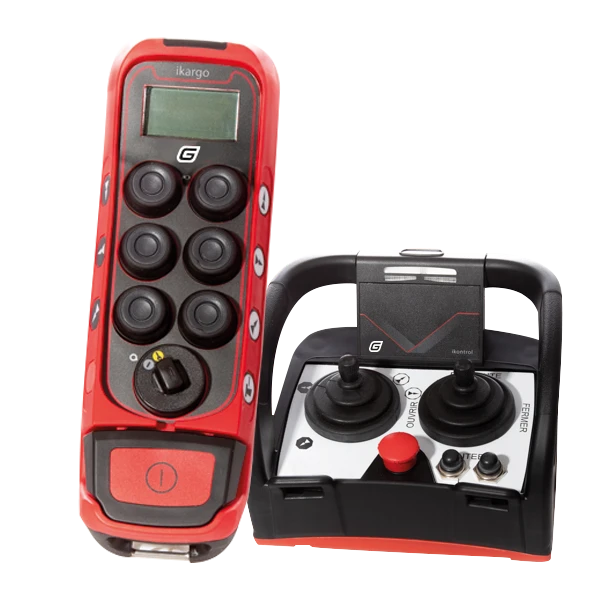
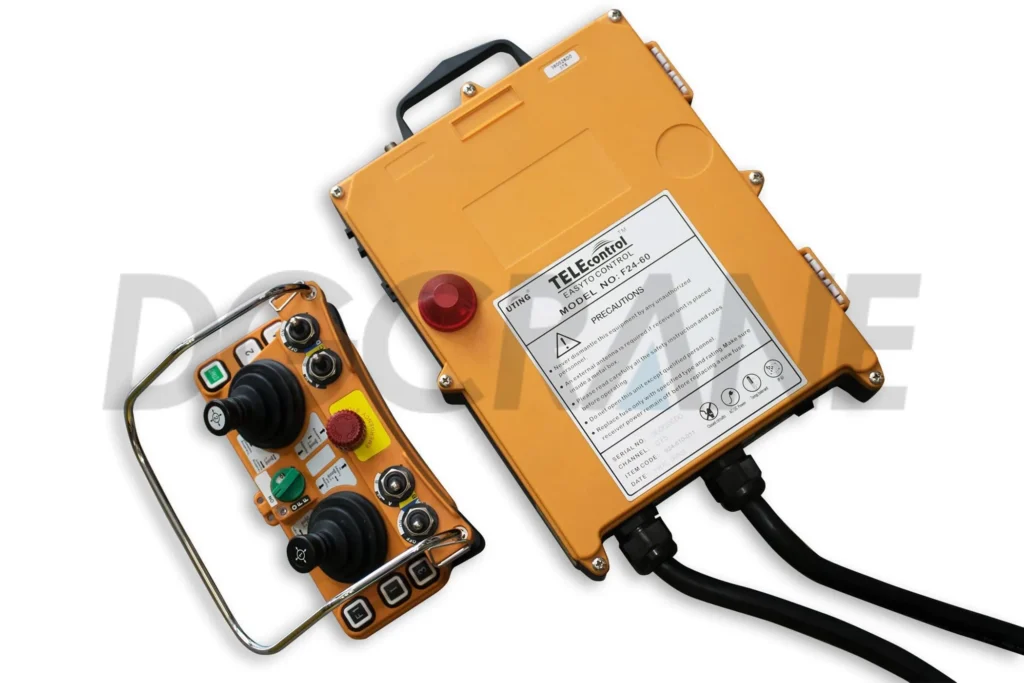
A radio remote control (RRC) system is a wireless control setup where an operator uses a hand-held transmitter to send commands via radio frequencies to a receiver mounted on machinery or equipment. These systems let you control equipment from a safe distance, avoiding the hazards of being right next to moving parts or dangerous zones.
Key Components
| Component | Function |
|---|---|
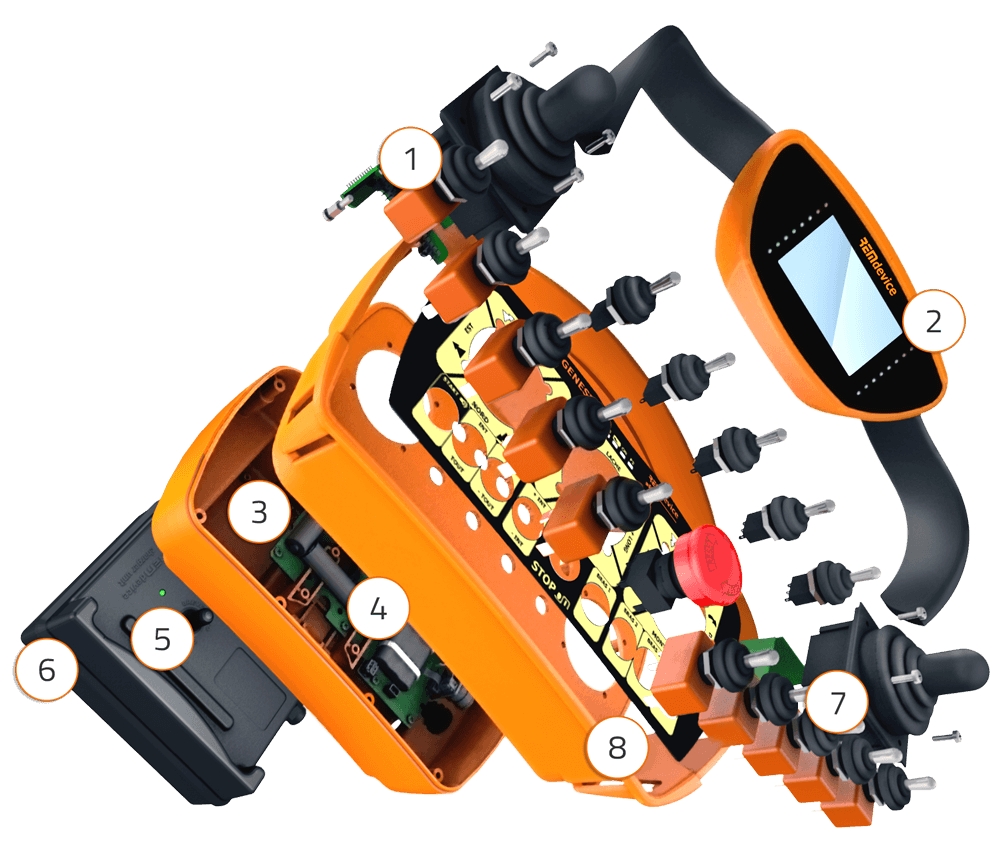
| Transmitter (Handset / Remote) | The unit held by the operator. It has buttons, joysticks, switches, indicators, possibly display screens. The user input is converted to radio signals. |
| Receiver | Mounted on the machine, it receives the radio signals and converts them into control signals to operate motors, valves, relays etc. |
| Antenna(s) | Both on transmit & receive sides. Good antenna design helps range and signal quality. |
| Controllers / Relays | Inside receiver: these interpret commands and activate outputs (for motion, lights, safety, etc.). |
| Power Supply / Batteries | Transmitter needs batteries; often designed to give long life, with low power consumption, sometimes rechargeable. Receiver is powered from machine power. |
| Safety Features | Emergency stop, “dead-man” switch, limit on signal loss, encryption or pairing, unique IDs, sometimes watchdog timers. |
| Feedback & Display (optional) | Some systems provide feedback to the operator: status of equipment, battery level, error codes, etc. |
Typical Wireless / Signal Specifications
-
Radio frequency bands such as 315 MHz, 433 MHz, 2.4 GHz are commonly used, depending on range, interference environment, regulatory constraints.
-
Spread spectrum, frequency hopping, or similar techniques are often used to avoid interference.
-
Range depends on power, antenna, environment (line of sight helps). In industrial use, ranges up to dozens or over a hundred meters.