What are Aluminum Profile Systems
An aluminum profile system refers to structural frameworks built from aluminum extruded profiles (shapes), often using modular “slots” or grooves for connections. These systems are widely used in industrial, architectural, automation, and manufacturing contexts because they allow flexible, lightweight, strong, and reconfigurable constructions.
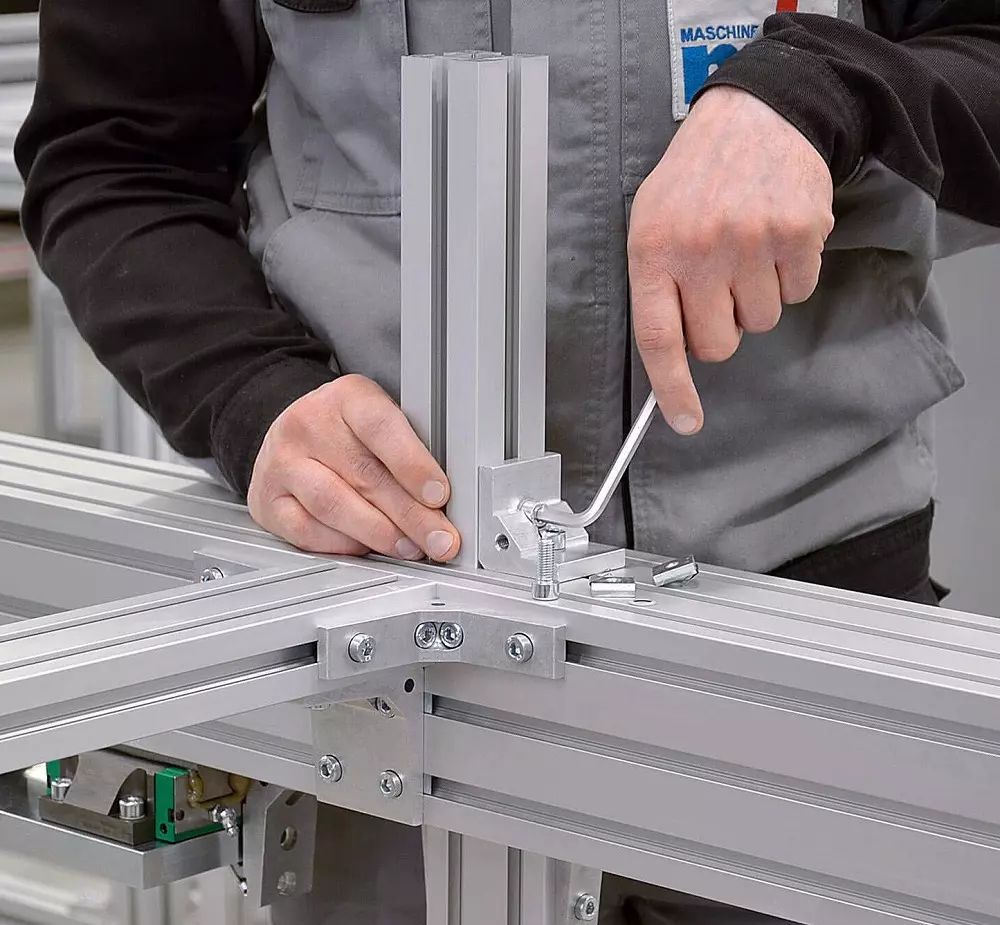
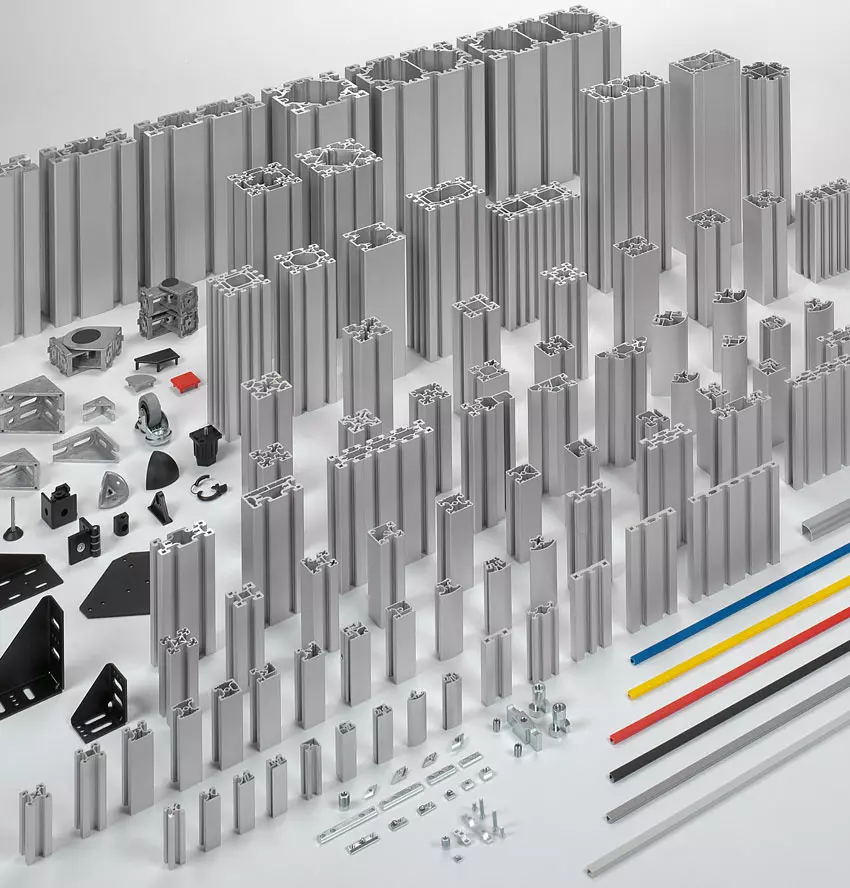
Profiles are created via extrusion — heated aluminum (often from 6000-series alloys) is forced through a die to produce a cross-section of desired shape (T-slot, U-channel, L-angle, tube, etc.). Accessories (connectors, corner brackets, end caps, nuts, T-nuts, etc.) allow assembly without welding or heavy fabrication.
Common Profile Types and Shapes
Here are typical shapes and styles of aluminum profiles:
| Profile / Shape | Description |
|---|---|
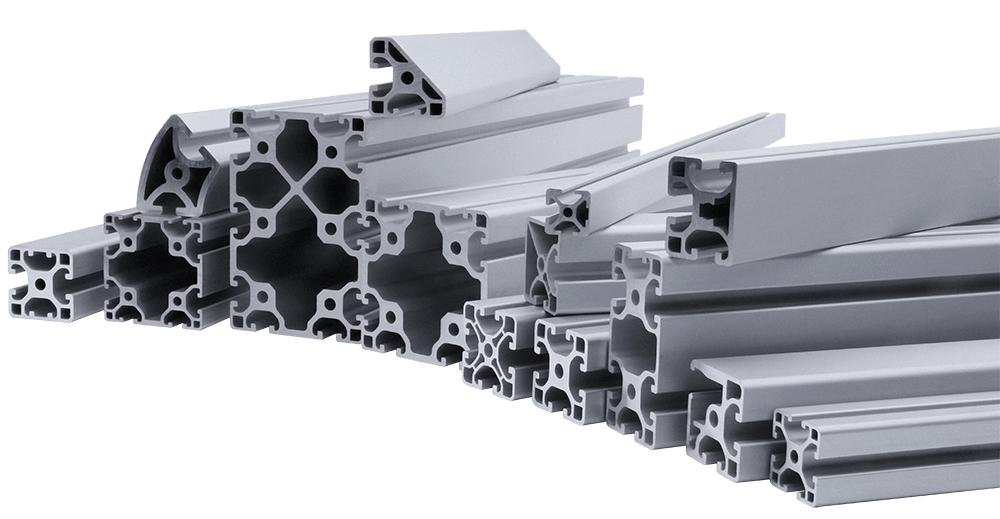
| T-slot Structural Profiles | Probably the most common. The profile has “T-slots” (grooves) along its sides where T-nuts, fastening elements slide in. Great for building frames, guards, workstations, enclosures. |
| Square / Round Tubes | Hollow sections, used when enclosed/tubular shapes are required or when strength in multiple directions is needed. |
| U-channel / C-channel / L-angle | For trims, edges, light framing, bracing. Sometimes custom shapes for architectural or decorative purposes. |
| Custom Extruded Shapes | For example window-door frames, curtain walls, heat sink fins, façade mullions/transoms. These need particular design for strength, finish, aesthetic |
Materials & Alloy Grades
Most aluminum profiles are made from 6000-series alloys (especially 6061, 6063, 6005, etc.). Some key properties:
-
They combine magnesium + silicon as alloying elements, which gives good strength, corrosion resistance, ability to be heat-treated, good surface finish.
-
For architectural or aesthetic uses (windows, façades, decorative profiles), the finish (anodizing, powder coating) is important.
Advantages
Here are the main benefits of using aluminum profile systems:
-
Modularity & Flexibility — Can assemble, disassemble, adjust easily. Profiles can be cut to needed length; connections via nuts, brackets.
-
Lightweight yet Strong — Aluminum is much lighter than steel but with proper cross-section and alloy strength can support significant loads.
-
Corrosion Resistance — Many aluminum alloys resist rust; finishes like anodizing or powder‐coating enhance durability outdoors or in harsh environments.
-
Ease of Assembly — Fewer specialized tools, often no welding needed; simpler joinery (T-nuts, brackets) reduces labor and rework.
-
Customizability — Wide range of profiles, finishes, accessory components, custom extrusions possible.
-
Sustainability — Aluminum is recyclable, extrusion processes generate less waste vs some machining.
Limitations / Trade-offs
-
Aluminum (especially in lighter alloy grades) can be less stiff than steels; for some heavy loads or large spans you may need thicker/wider profiles or reinforce with bracing.
-
The cost of aluminum profiles and high‐quality connectors can be higher upfront vs simple steel or fabricated steel frames (depending on region).
-
Finishes (anodizing, powder coating) add cost and time.
-
Thermal expansion and deformation under load or heat can be more significant in aluminum vs steel; design must account for this.
Typical Applications
-
Machine frames, workstations, automation cells, safety guarding and enclosures.
-
Industrial conveyors, linear slide systems.
-
Furniture, shelving systems, modular interiors and partitions.
-
Architectural: window & door profiles, curtain walls, façades.
-
Outdoor uses: frameworks for solar panels, display kiosks, greenhouses.
Design / Selection Considerations
When choosing or designing with aluminum profile systems, consider the following:
| Factor | What to check / dimension |
|---|---|
| Profile Size / Series | E.g. 20-series (20×20 mm), 30-series, 40-series, etc. Slot width (e.g. 6 mm, 8 mm, 10 mm) matters for compatible connectors. |
| Alloy & Temper | Choose a variant with needed strength and finish (e.g. 6063-T5 or T6, 6061 for higher strength). |
| Load Requirements | Dead load + live load + impact + safety factor. Consider bending, torsion, shear. Also vibration if relevant. |
| Span & Deflection | Larger spans require stiffer profiles or additional supports/bracing. Limit deflection based on use. |
| Finish / Surface Treatment | Anodizing, powder coating, etc. for corrosion protection, appearance, wear. |
| Accessory Compatibility | T-nuts, joiners, brackets, end caps, covers. Ensure slot geometry matches accessories. |
| Thermal / Environmental Conditions | Temperature changes, humidity, chemical exposure, UV exposure if outdoors. |
| Safety / Standards | Depending on region ‐ structural integrity, load bearing safety, possibly local codes for construction frames or architectural use. |