Machine Automation Systems
What Is a Machine Automation System
A machine automation system refers to integrating various hardware and software components to control, monitor, and carry out physical tasks in industrial or manufacturing settings with minimal human intervention. It may involve robotics, sensors, control logic, feedback systems, motion control, safety components, and data communication. The goal is consistency, efficiency, quality, safety, and scalability.
Key Components
Here are the principal subsystems and components you’ll typically find in machine automation systems:
| Component / Subsystem | Function / Role |
|---|---|
| Power Distribution | Supplies electrical power to motors, drives, controls. Includes power supplies, circuit breakers, fuses, transformers, filtering. Ensures stable power and protection. |
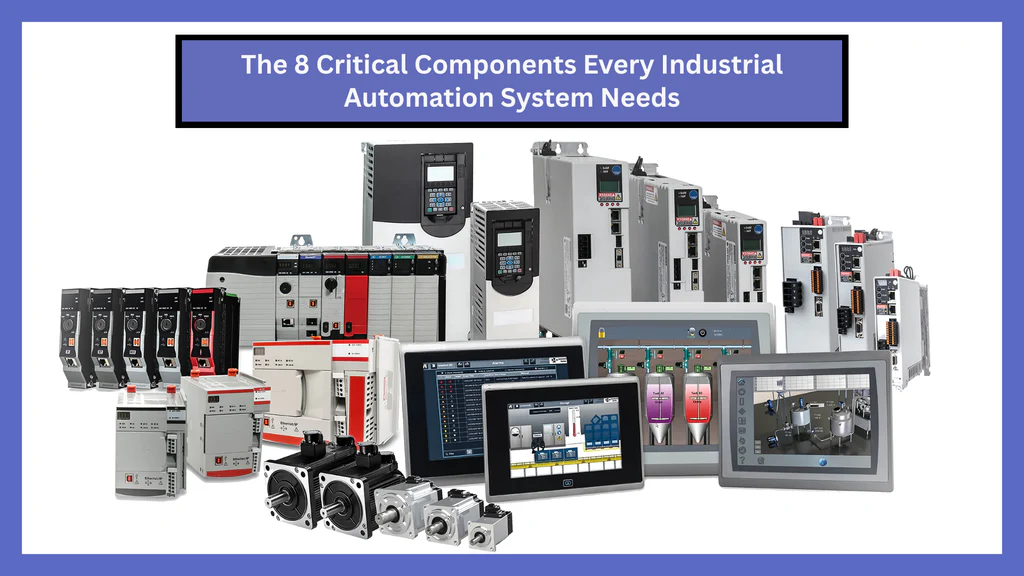
| Motor Control & Drives | Manages and drives electric motors (AC, DC, servo). Includes inverters or Variable Frequency Drives (VFDs) to adjust speed/torque. Used for motion control. |
| Programmable Logic Controllers (PLCs) / Controllers | The “brain” of the system. Executes control logic based on inputs (from sensors) to trigger outputs (actuators, motors, valves). |
| Human-Machine Interface (HMI) | Touchscreens or panels/operators use to monitor system status, give commands, see alerts, adjust parameters. |
| Sensors (Discrete & Analog) | Provide inputs: detecting presence, position, temperature, pressure, speed, etc. Discrete sensors give digital signals (on/off), analog sensors give varying values. |
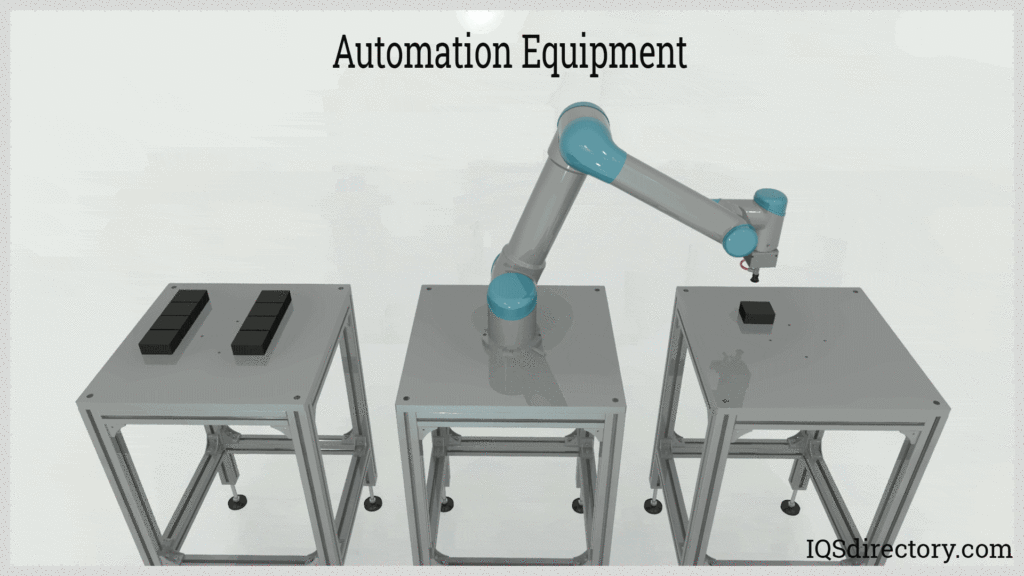
| Actuators | Output devices that perform physical action: motors, pneumatic cylinders, hydraulic actuators, solenoid valves. |
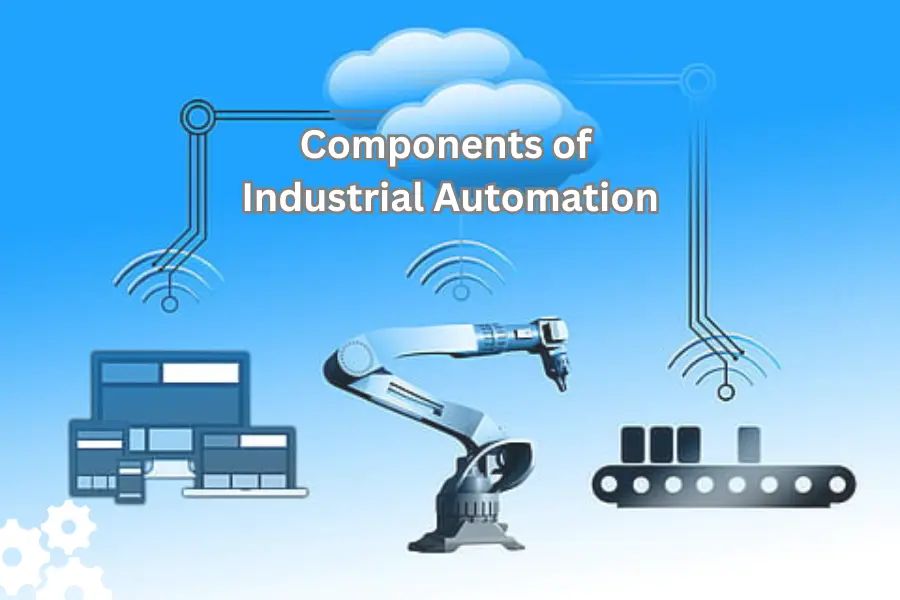
| Communication Systems / Networks | For exchanging data between components: PLC ↔ sensors/actuators, PLC ↔ HMI, PLC ↔ higher-level systems. Protocols: Ethernet/IP, Modbus, PROFINET, etc. |
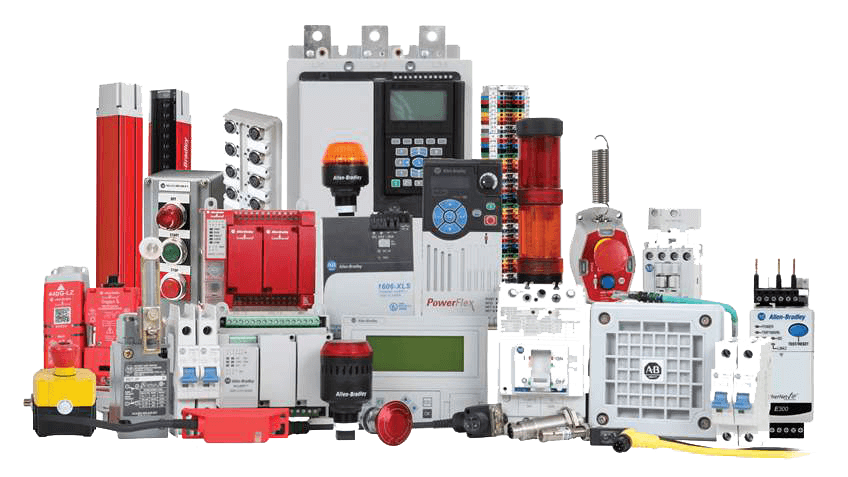
| Safety Systems | Safety interlocks, emergency stops, guarding, light curtains, safe rated I/O: to ensure failures or unsafe conditions are detected and stopped. |
| Control and Feedback Loops | Closed-loop control (e.g. PID controllers) to maintain desired performance (speed, position, temperature, etc.) using feedback from sensors. (Often embedded in PLC / drives) |
Benefits of Machine Automation
Using machine automation brings many advantages:
-
Higher Productivity & Throughput: Automation systems can run continuously (24/7) without fatigue.
-
Improved Quality & Consistency: Tasks performed the same way each time reduce defects.
-
Lower Operational Costs / Labor Costs: Less dependence on repetitive manual labour; fewer errors and waste.
-
Enhanced Safety: Dangerous tasks can be done by machines, reducing risk to human workers.
-
Greater Flexibility & Scalability: It’s easier to reprogram or retool automation to produce different products or adapt processes.
-
Data & Monitoring for Better Maintenance: Automation often provides monitoring, diagnostics, predictive maintenance, reducing downtime.