What is a Crane & Hoist System?
-
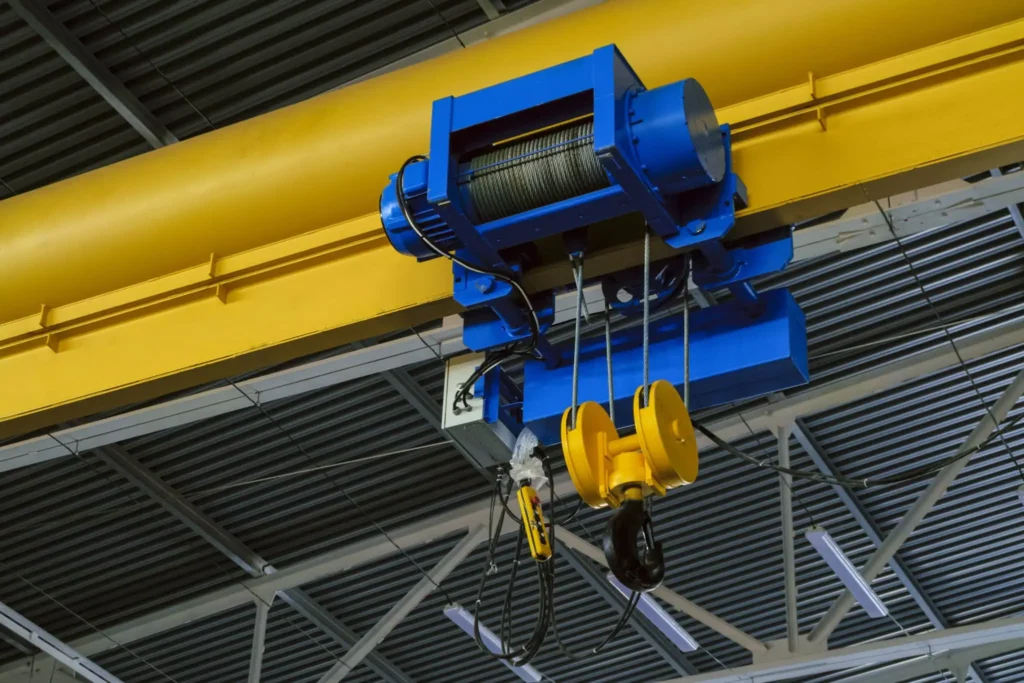
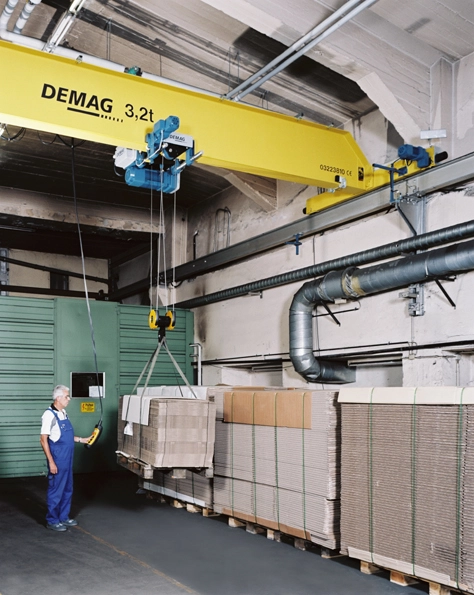
Crane: A mechanical system designed to lift, move, and position heavy loads across a defined workspace.
-
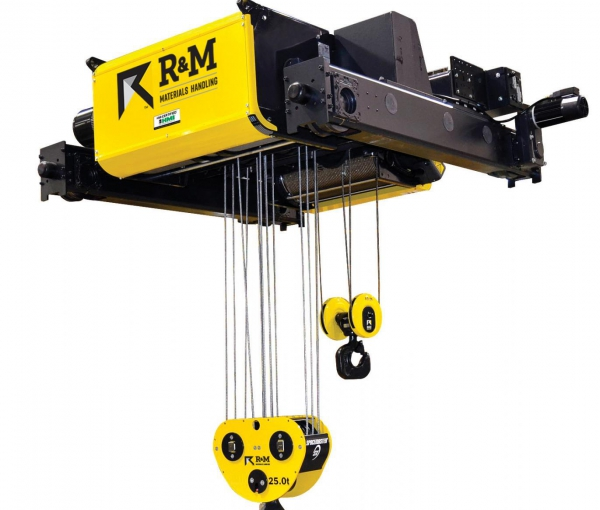
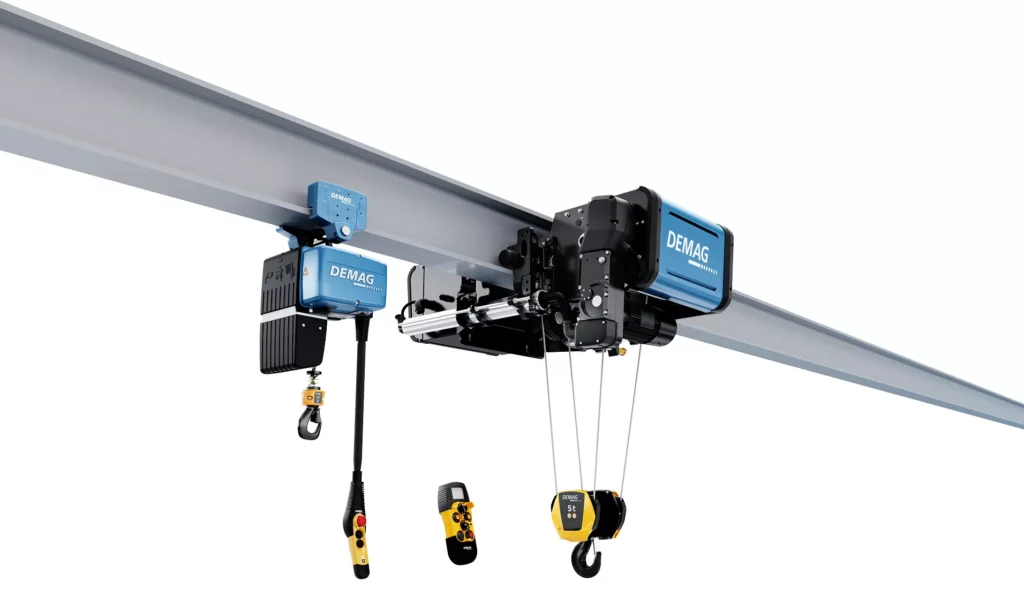
Hoist: The lifting device (wire rope or chain) attached to a crane or used independently. It raises and lowers the load.
Together, a crane-hoist system includes the supporting structure (bridge, gantry, jib, or workstation), the hoist, trolley, runway rails, electrical/control systems, and safety devices.
Main Crane Types
| Type | Structure | Advantages | Limitations |
|---|---|---|---|
| Overhead (Bridge) Crane | Bridge runs across building runways, hoist travels along the bridge | Maximizes floor space, wide coverage, suitable for heavy-duty loads | High installation cost, requires strong building support |
| Gantry Crane | Bridge supported by legs (freestanding), runs on ground rails | Can be used outdoors or in open spaces, portable | Needs rail space and reinforced ground, less flexible for relocation |
| Jib Crane | Pivoting arm (jib) mounted on wall or pillar | Compact, ideal for repetitive localized tasks | Limited coverage area and reach |
| Workstation / Light-Duty Crane | Small modular crane or suspended hoist | Low cost, flexible, easy to install | Not suitable for heavy or continuous operations |
Types of Hoists
| Category | Examples |
|---|---|
| Lifting Medium | • Chain – light to medium duty, maintenance tasks • Wire Rope – heavy duty, faster lifting, industrial use |
| Power Source | • Manual – hand-operated for small loads • Electric Hoist – common, efficient, easy to control • Pneumatic/Air Hoist – used in hazardous/explosive environments |
| Mounting Style | • Hook-mounted – portable, hung from trolleys • Lug-mounted – bolted into a structure/trolley • Trolley-mounted – runs along beams/rails for mobility |
Key Selection Factors
-
Load Capacity & Duty Cycle – Match or exceed the maximum expected weight, including safety margins.
-
Lift Height & Span – Consider maximum lifting height and horizontal reach required.
-
Usage Frequency – Heavy-duty operations require higher-grade cranes and hoists.
-
Environment – Temperature, humidity, dust, chemicals, or explosion risks affect design/material choices.
-
Building Structure – Ensure the building supports runway rails and crane loads.
-
Safety & Standards – Compliance with ISO, ASME, CMAA, or local safety regulations. Features include brakes, limit switches, overload protection, and scheduled inspections.