What is a Pneumatic System
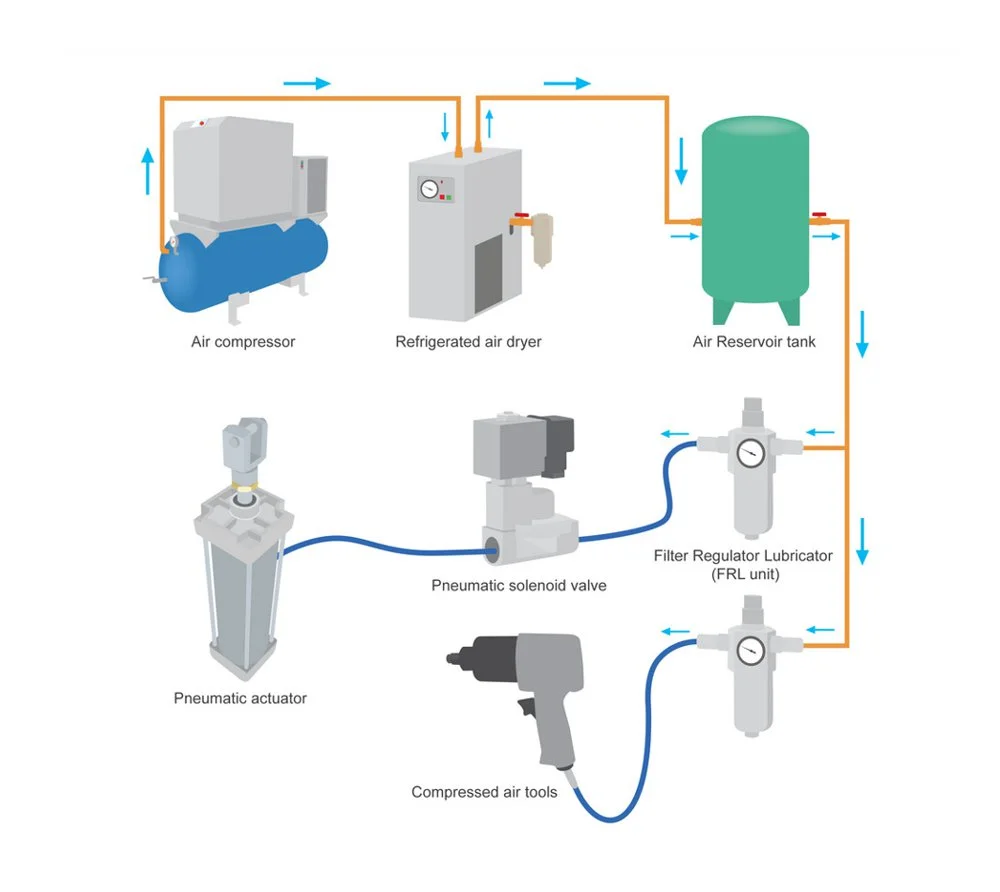
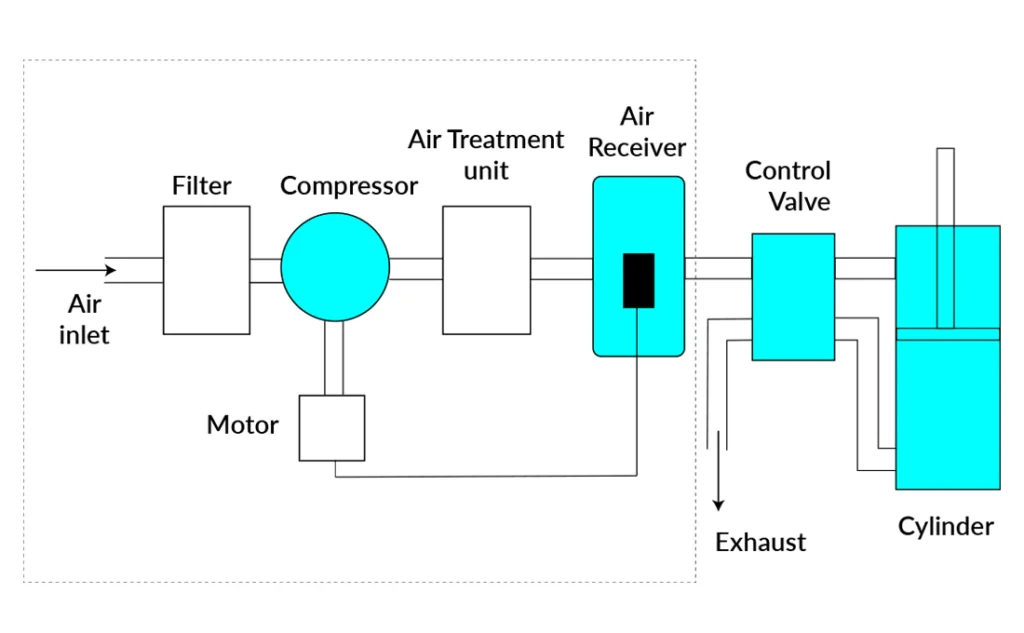
A pneumatic system uses pressurized gas (usually air) to transmit and control energy. The compressed air is stored, regulated, directed, and then used to do mechanical work via actuators.
Main Components
Here are the major parts/components of a pneumatic system, with their roles:
| Component | Function / Role |
|---|---|
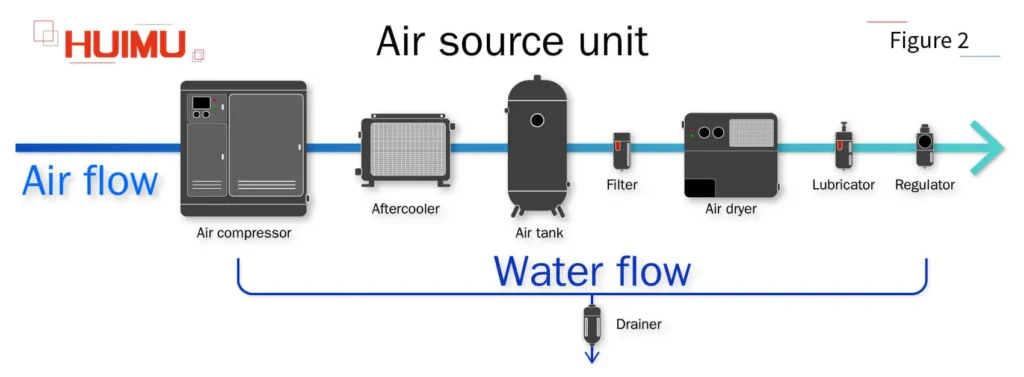
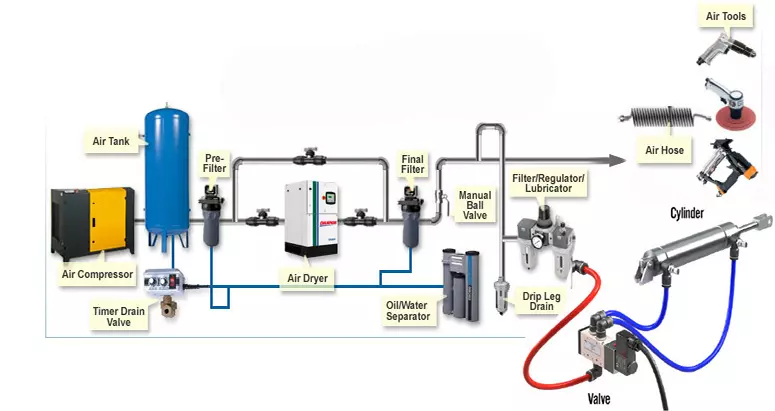
| Air Compressor | Takes in atmospheric air, compresses it to higher pressure. It’s the source of “power” for the system. |
| Air Receiver / Tank | Stores compressed air, helps smooth out pressure fluctuations, allows steady supply. |
| Air Preparation (Filter, Regulator, Lubricator) | Cleans the air (removes moisture, dust, oil), regulates pressure to desired value, adds lubrication if needed for certain downstream parts. Ensures longevity and proper operation. |
| Control Valves | These include directional control valves, pressure relief valves, flow control valves, etc. They control the direction, rate, pressure, or shut-off of the air flow. |
| Actuators | Convert the air pressure into mechanical motion. Examples: pneumatic cylinders (linear motion), pneumatic motors (rotary motion). |
| Piping, Hoses, Fittings | Connect everything, convey the compressed air. Must be rated for pressure, well sealed to avoid leaks. |
How It Works (Operation Flow)
-
Compression – Air is drawn in and compressed by the compressor.
-
Storage – Compressed air is stored in a receiver tank.
-
Preparation – Air is filtered, dried, and sometimes lubricated; pressure is regulated.
-
Control / Routing – Valves direct where the air goes, when, and at what pressure/flow.
-
Actuation – Actuators receive the air pressure and perform work (move something, rotate, clamp, etc.).
-
Exhaust / Return – After work is done, air is vented out or returned safely.
Advantages & Limitations
| Advantages | Limitations |
|---|---|
| • Relatively simple design and control compared to hydraulics or pure electric in many cases. • Clean (air), safe (less risk of fire or oil leaks), suitable in hazardous or dirty environments. • Fast response, good for repetitive motion. • Components are often durable, maintenance is manageable. |
• Air compressibility means less precise control vs fluids/hydraulics in some scenarios; there can be lag or cushioning. • Leakage can reduce efficiency; air leaks waste energy. • Power efficiency is often lower (energy lost compressing, cooling, reheating). • Pressure/flow limitations – for very high forces hydraulics may be better. |
Common Applications
-
Factory automation: moving, gripping, pushing, clamping.
-
Material handling and packaging: conveyors, filling, sealing.
-
Tools: pneumatic tools such as impact wrenches, nail guns, drills.
-
Food, chemical, pharmaceutical industries: where clean or non-contaminating power is important.